Direct insertion ins(2;5)
46,XY,ins(2;5)(q14.2;q22q31)
Also known as: insertion, ins(2;5), interchromosomal insertion
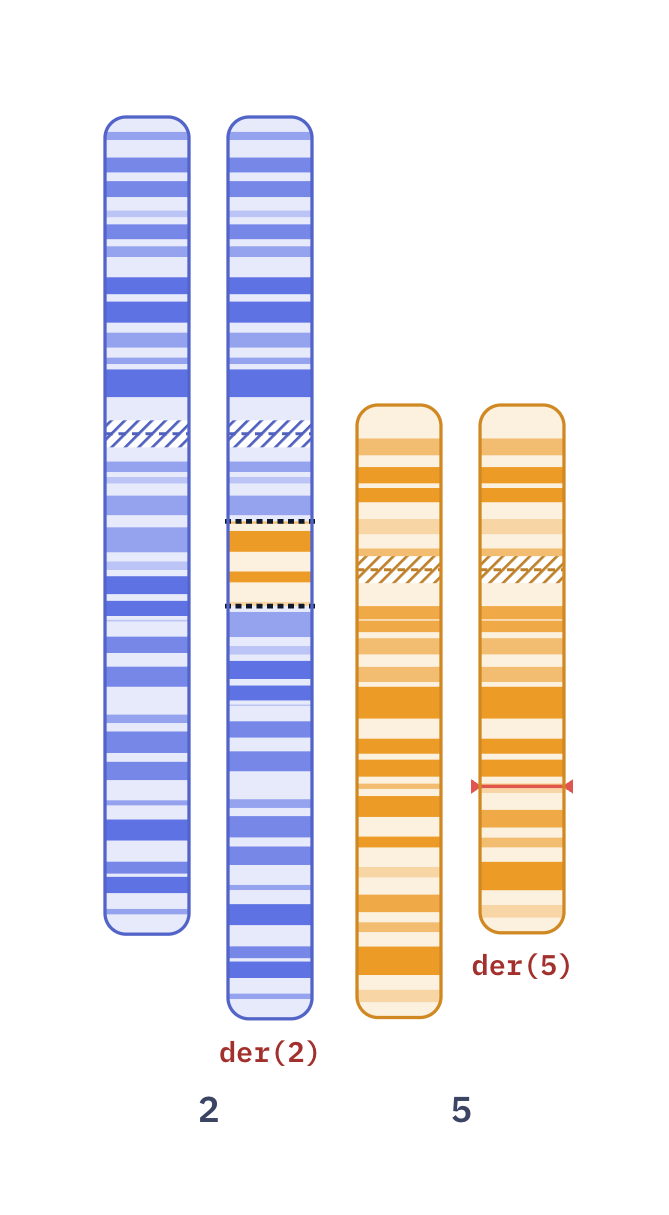
46,XY,ins(2;5)(q14.2;q22q31) is a direct interchromosomal insertion: the segment of chromosome 5 between bands 5q22 and 5q31 is removed and inserted into chromosome 2 at band 2q14.2. The carrier is balanced, but the inserted segment can segregate on its own, so a child can inherit a pure duplication or a pure deletion of 5q22-q31.
Open in the interactive visualizer →
What the notation means
46 is the number of chromosomes counted in the cell. That is the normal number: 22 pairs of autosomes, the chromosomes other than X and Y, plus one pair of sex chromosomes. XY lists the sex chromosomes, here one X and one Y, the usual male set. These two fields open every karyotype because they describe the whole cell. Any abnormality is written after them.
An INSERTION (ins): a segment moved into a new position, within its own chromosome or into another. (2;5) lists the two chromosomes involved. Chromosome 2 receives the segment and chromosome 5 donates it. The receiving chromosome is always written first, so you can tell which is which. (q14.2;q22q31) gives the site on the receiving chromosome first, 2q14.2, then the two breakpoints that mark off the segment that moves, 5q22 and 5q31. The two are written in the order they sit once the segment is in its new place, reading from the tip of the short arm toward the tip of the long arm. Written q22 then q31, the segment sits the same way round as before. Written q31q22, it would have gone in reversed, an inverted insertion.