Pericentric inversion 9
46,XY,inv(9)(p11q13)
Also known as: inv(9), inversion 9 variant
46,XY,inv(9)(p11q13) is a pericentric inversion of chromosome 9. It is one of the most common structural variants in the human genome and is generally considered a benign finding.
Open in the interactive visualizer →
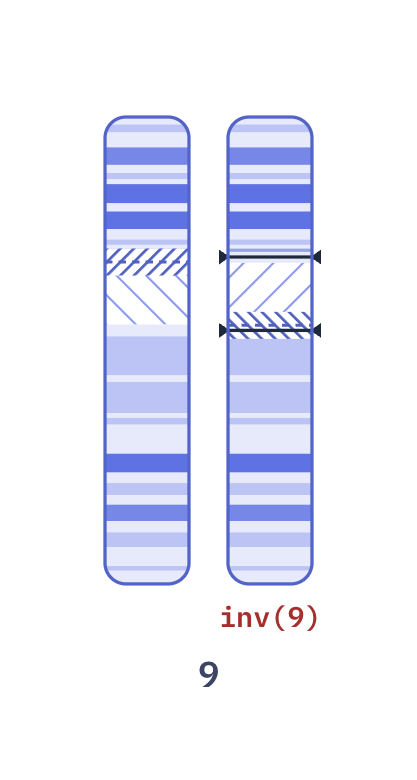
What the notation means
46 is the number of chromosomes counted in the cell. That is the normal number: 22 pairs of autosomes, the chromosomes other than X and Y, plus one pair of sex chromosomes. XY lists the sex chromosomes, here one X and one Y, the usual male set. These two fields open every karyotype because they describe the whole cell. Any abnormality is written after them.
An INVERSION (inv): a segment turned end for end within its chromosome. (9) refers to chromosome 9, the chromosome the inversion is on. One chromosome is listed, so one group of breakpoints follows, because each chromosome listed gets a group of its own. (p11q13) gives one breakpoint on each arm, 9p11 and 9q13, short arm first. Because one break is on each arm, the flipped segment includes the centromere. That is called a pericentric inversion.