Childhood B-ALL t(12;21)
46,XX,t(12;21)(p13;q22)
Also known as: ETV6-RUNX1, TEL-AML1, t(12;21)
46,XX,t(12;21)(p13;q22) fuses ETV6 with RUNX1 and is the most common recurrent translocation in childhood B-cell acute lymphoblastic leukemia. It usually carries a favorable prognosis and is often cryptic on banding, requiring FISH or molecular testing.
Open in the interactive visualizer →
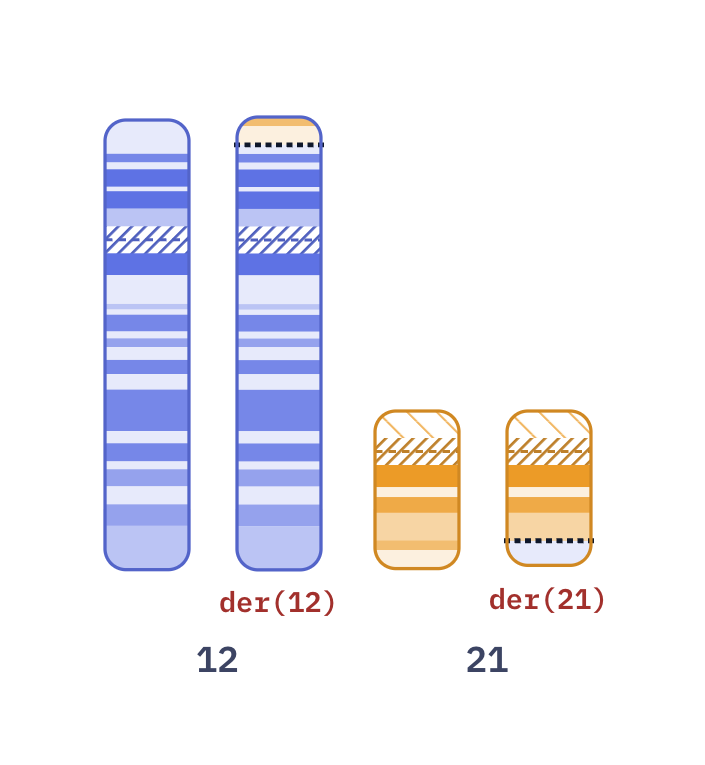
What the notation means
The shape of this abnormality
- (12;21)
- the two chromosomes, the sex chromosome or the lower number first.
- (p13;q22)
- one breakpoint on each chromosome, in the same order; each keeps its own centromere and takes the other's piece beyond the break.
- count · sex chromosomes
- a normal count and the usual female sex chromosomes
- abnormality
- a reciprocal TRANSLOCATION: chromosomes 12 and 21 break (at 12p13 and 21q22) and swap the pieces beyond those breaks, giving two derivative chromosomes der(12) and der(21). The pieces that move are the tips, which carry no centromere; each derivative keeps the centromere it started with, and that is the chromosome it is named for
Clinical notes
t(12;21), childhood B-ALL
ETV6::RUNX1. This finding means the most common recurrent rearrangement of childhood B-lymphoblastic leukemia and places it in the favorable-risk group that helped set the cure rate. On banding it is almost never actually seen: the exchanged segments are so alike in size and pattern that the rearrangement is cryptic and is found by FISH or RT-PCR, which makes it the standing argument for not trusting a normal karyotype.